


What is a Plotopia?
For decades, buying a plot meant one thing: purchasing a piece of land and waiting for its value to grow over time. The process was simple, transactional, and often emotionally disconnected. Families would visit the site once during purchase, perhaps once more after registration, and then the land would remain untouched for years.
Across India, especially in rapidly expanding cities like Hyderabad, thousands of plotted layouts silently sit behind locked gates and faded boards. No activity. No emotional connection. No community life. Just vacant parcels waiting for appreciation.
But modern buyers are beginning to ask a different question:
What if land could offer more than ownership?
What if a plotted development could feel alive even before a home is built?
That question has led to the birth of a new concept called Plotopia.
This blog breaks down the investment case for this segment why luxury plotted developments in the Kompally growth corridor are being taken seriously, what drives their appreciation, and what to look for if you’re evaluating options.
So, What Exactly Is a Plotopia?
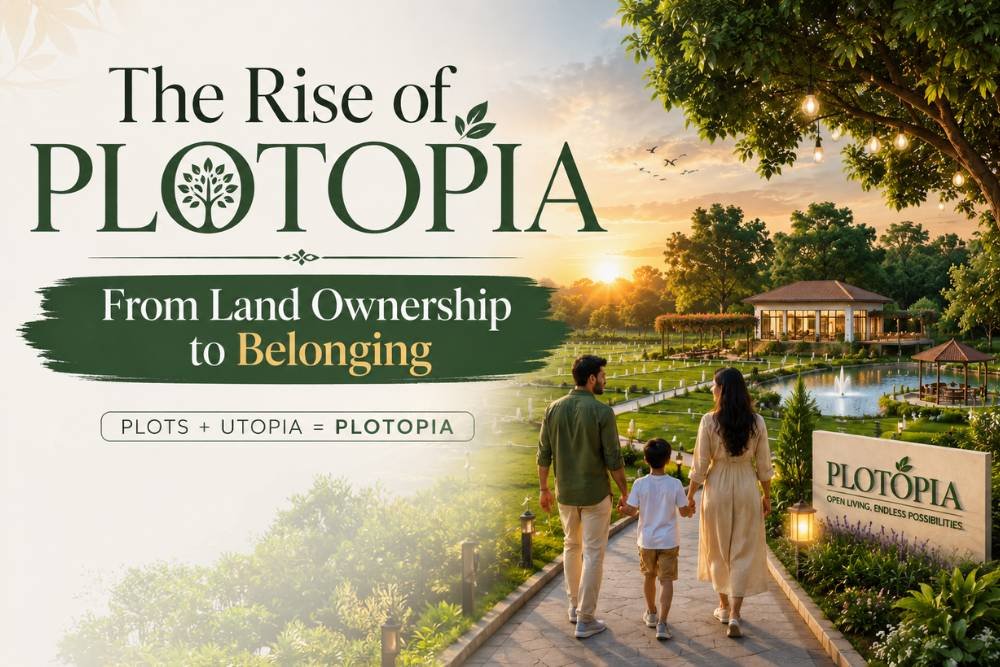
A Plotopia is not just an open plotted layout with roads and boundaries. It is a living land concept where plots are designed around experiences, community engagement, nature, wellness, and belonging.
In simple terms:
Plotopia = Plots + Utopia
It transforms the traditional “buy and forget” model into a “buy, belong, and benefit” ecosystem.
Unlike ordinary layouts, a Plotopia is built to ensure that:
- Families continue visiting regularly
- The land remains active and emotionally connected
- Community experiences increase engagement
- Amenities are not decorative, but experiential
- The plotted development evolves into a lifestyle destination
This is why many people are now comparing Plotopia-style developments to resort-style plotted communities, where the land itself becomes part of everyday living.
Why Traditional Open Plots Often Fail Emotionally
One of the biggest challenges with plotted investments is emotional disconnect.
Most buyers purchase plots with long-term intentions:
- Future home construction
- Retirement planning
- Wealth creation
- Legacy investment for children
But in reality, many plots remain unused for years.
According to several Indian real estate market studies, one of the key reasons plotted developments underperform in resale and engagement is because they lack:
- Regular footfall
- Lifestyle infrastructure
- Community interaction
- Emotional utility
As a result:
- Land feels “far away”
- Owners stop visiting
- Layouts become dormant
- Appreciation slows compared to active communities
This is exactly the problem Plotopia aims to solve.
The Shift From Open Plots to Experience-Driven Communities
Today’s buyers don’t just want land. They want:
- A lifestyle investment
- Weekend experiences
- Green surroundings
- Family engagement
- Wellness-oriented environments
- Safe gated communities
- Resort-like amenities
This has increased demand for:
- Luxury plotted developments in Hyderabad
- Resort-style plots near Hyderabad
- Gated community plots with clubhouse
- Weekend home plots near Kompally
- Villa plots with amenities
- Nature-themed plotted developments
- DTCP approved premium plots
- Plots with lifestyle amenities
Plotopia is essentially the evolution of all these expectations into one unified concept.
What Makes a Plotopia Different?
A plotopia is designed around the idea that land should remain emotionally alive.
Instead of building only roads and compound walls, the ecosystem includes:
- Nature zones
- Community spaces
- Wellness activities
- Recreational experiences
- Cultural engagement
- Family-oriented amenities
The goal is simple:
Even if you don’t build a house immediately, your land should still feel valuable, usable, and connected to your life.
This creates stronger emotional ownership and often stronger appreciation as well.
Aamvana Avenue: The World’s First Plotopia
One of the first real-world examples of this concept is Aamvana Avenue by APD Developers, introduced as The World’s First Plotopia.
Located near Masaipet in North Hyderabad, just
- 2 km from the Regional Ring Road (RRR)
- 4 km from NH-44
- Around 35 minutes from Kompally
Aamvana Avenue was designed not as a plain plotted venture, but as a living ecosystem rooted in the philosophy of Pancha Jeevana.
The Pancha Jeevana Philosophy Behind Plotopia
At the heart of Plotopia lies Pancha Jeevana, the five pillars of joyful living.
These five elements transform the idea of land ownership into a holistic lifestyle experience.
1. Nature — Reconnect With Earth
Unlike ordinary layouts dominated by concrete roads, Plotopia developments integrate natural experiences directly into the environment.
At Aamvana Avenue, this includes:
- Mature mango groves
- Butterfly gardens
- Nakshatra gardens
- Herbal plantations
- Water bodies and duck ponds
- Legacy tree plantation zones
The idea is to make every visit feel refreshing not transactional.
This is why many buyers today search specifically for:
- Nature-themed plots near Hyderabad
- Farm-style plotted developments
- Eco-friendly gated community plots
2. Culture — Preserving Indian Roots
Plotopia is not only about luxury. It is also about identity.
Experiences like:
- Pottery workshops
- Folk music evenings
- Firewood cooking
- Vana Bhojanam gatherings
- Traditional art activities
help preserve cultural belonging in an increasingly urban world.
This transforms plotted communities into spaces where families create memories—not just investments.
3. Bonding — Creating Active Communities
One major issue with ordinary plotted ventures is inactivity.
Plotopia solves this through:
- Interactive family zones
- Outdoor games
- Tree houses
- Rope activities
- Picnic lawns
- Weekend events
At Aamvana Avenue, even the arrival experience includes eco-friendly buggy rides and bullock-cart-inspired entry concepts.
This regular engagement keeps the community active, which indirectly helps:
- Security
- Maintenance
- Emotional attachment
- Resale perception
4. Wellness — A Return to Balance
Modern urban lifestyles are increasingly stressful. Buyers are now looking for wellness-oriented living environments rather than purely financial investments.
This has driven demand for:
- Weekend retreat plots near Hyderabad
- Wellness communities
- Plots with meditation zones
- Resort-style villa plots
Plotopia developments integrate:
- Yoga spaces
- Meditation areas
- Reflexology pathways
- Herbal tea corners
- Nature therapy experiences
- Digital detox camping spaces
This makes the plotted community usable even before home construction begins.
5. Belonging — The Emotional Side of Land Ownership
Perhaps the most important pillar of Plotopia is belonging.
Traditional plots often feel disconnected because they lack human interaction.
Plotopia creates emotional continuity through:
- Family events
- Community celebrations
- Bonfire evenings
- Camping nights
- Clubhouse gatherings
- Shared experiences
At Aamvana Avenue, even features like a “Family Handprint Wall” are designed to create lasting emotional memories.
The land no longer feels like an investment sitting somewhere outside the city.
It begins to feel like an extension of family life.
Why Plotopia May Become the Future of Plotted Development
The Indian real estate market is evolving rapidly.
Buyers today are no longer satisfied with:
- Plain layouts
- Empty roads
- Basic infrastructure
- Generic amenities
Instead, they are prioritising the following:
- Experience-driven communities
- Wellness-based living
- Sustainable development
- Lifestyle-focused investments
- Emotional utility
This is why concepts like the following:
- Resort-style plots near Hyderabad
- Luxury gated community plots
- Weekend home communities
- Premium villa plots with amenities
are becoming increasingly popular.
Plotopia sits exactly at the intersection of all these trends.
The Bigger Idea: Land That Lives
Perhaps the simplest way to understand Plotopia is this:
A normal plotted layout gives you ownership.
A Plotopia gives you ownership, experiences, belonging, wellness, nature, and community all together.
It changes the role of land from the following:
Passive asset → Active lifestyle ecosystem
And in a world where people increasingly crave slower, healthier, and more meaningful living, this shift feels less like a trend and more like the future.
Final Thoughts
The concept of Plotopia is still new, but the need behind it is deeply real.
People no longer want land that sits forgotten for years. They want spaces that remain emotionally alive, socially active, and personally meaningful. They want plotted developments where families can spend weekends, children can reconnect with nature, and communities can grow together.
That’s what makes Plotopia different.
It is not simply a plotted venture with extra amenities.
It is a completely new philosophy of land ownership.
And developments like Aamvana Avenue are showing what happens when plotted communities are designed not just for investment but for life itself.
Because the future of real estate may not belong to concrete towers or idle layouts.
It may belong to places where land truly lives.